From Medical Needs to Real-World Solutions: Our R&D in Focus
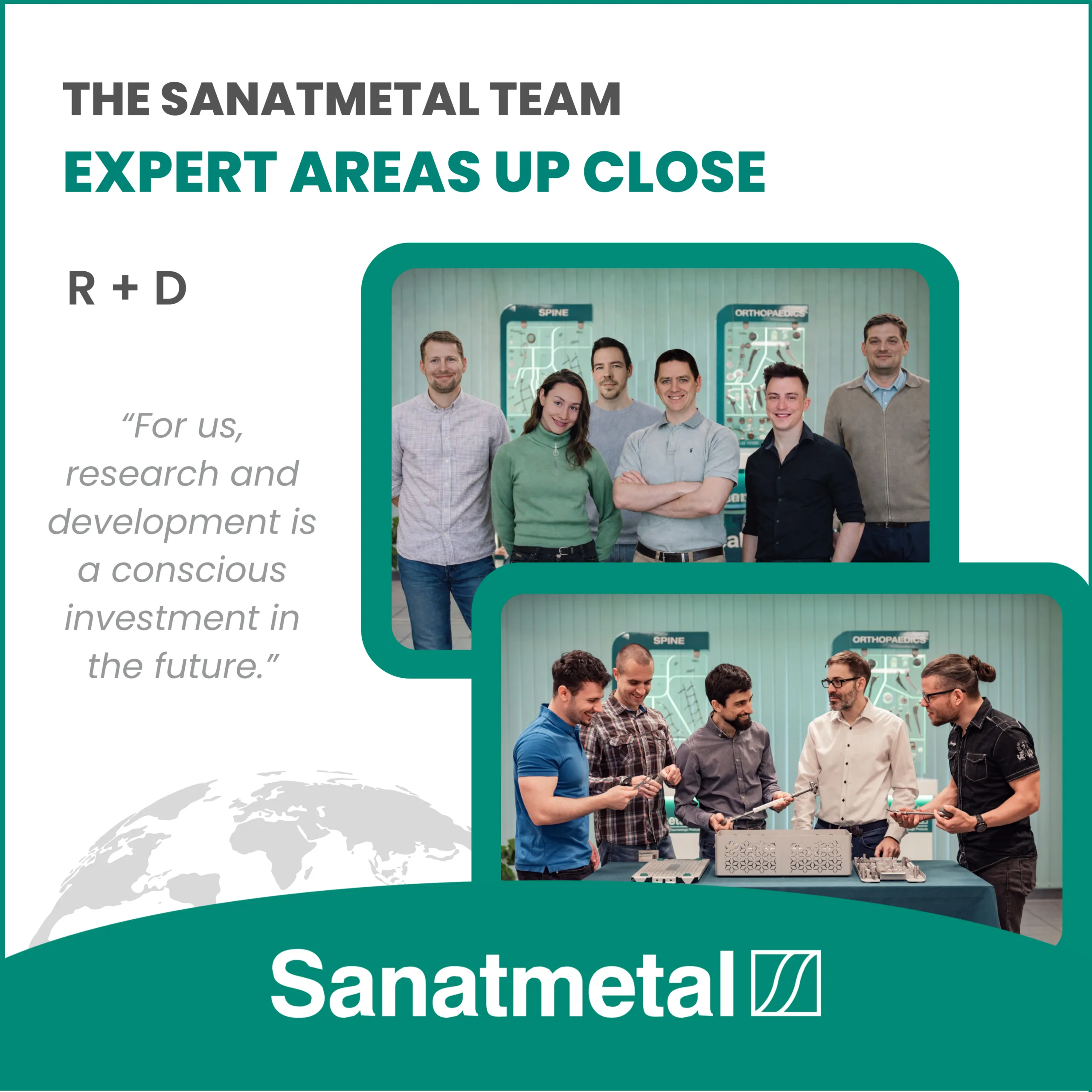
New solutions, continuous renewal, and meaningful responses to real medical needs — although the work of Research & Development takes place behind the scenes, it plays a defining role in our everyday success.
The R&D team works not only on new products, but also continuously rethinks and improves existing solutions, while responding to unique and highly specific customer needs as well. The goal is always the same: to develop solutions that provide real support in medical practice.
To learn more about how the team operates, what challenges development work involves, and what success means to them, we spoke with Bálint Kozma, Head of R&D.
Multiple Locations, One Shared Goal
We currently have several new product development projects running in parallel, supported by our 11-member R&D team working across three locations — Eger, Budapest, and Nyíregyháza — within a divisional structure. This setup is intentional: development projects are organized around four main areas — spine, orthopaedics, trauma, and dental developments.
One of the greatest advantages of this divisional model is faster decision-making, greater project focus, and shorter lead times. All of this enables new solutions to reach the market more quickly and allows us to respond more effectively to professional needs.
What Makes R&D Work Unique?
Compared to other industries, the work of development engineers is particularly diverse. New demands arise continuously, no two tasks are exactly the same, and parallel projects require constant attention-sharing. This presents a significant challenge, but it is also an essential condition for remaining competitive in the long term.
The development of a new implant system — including clinical trials — can take as long as 3 to 5 years. That is why it is strategically important to continuously launch new projects and introduce new systems to the market over time. When a product approaches the end of its life cycle, development of the next generation must already be underway. Continuous development and renewal are among the most important drivers of the company’s competitiveness.
Balancing Market Needs and Individual Requirements
Since development activities involve substantial costs, it is especially important to ensure resources are allocated in a conscious and well-planned manner. The work of the R&D team requires constant balancing between projects that promise market return and the fulfillment of doctors’ unique, specialized needs. Although the latter do not always align with the expectations of the mass market, they still play a key role in building a professionally strong and respected position.
What Does Success Mean to Us?
Success can be measured in many ways, but perhaps the greatest recognition is when our developments are used with satisfaction in the operating room. Feedback from renowned doctors, professors, and heads of clinics is especially valuable — these are the clearest confirmations that the work of the R&D team creates real, tangible value.